Tuesday, July 28, 2026

The “Take It or Leave It” Attitude Is Fading from the Market – What That Means for You


The “Take It or Leave It” Attitude Is Fading from the Market – What That Means for You


Negotiations are back. More buyers are asking for better deals, and more sellers are giving them. Builders are throwing in extras, too. 

That’s why whether you’re buying or selling today, there are two terms you’ll hear a lot: concession and incentive.

  • A concession is something a seller agrees to during negotiations to get a deal done.

  • An incentive is a perk a builder (or a seller) advertises upfront to attract buyers.

Let’s run through what you need to know about both and how they could play a role in your move.

More Sellers Are Agreeing to Concessions

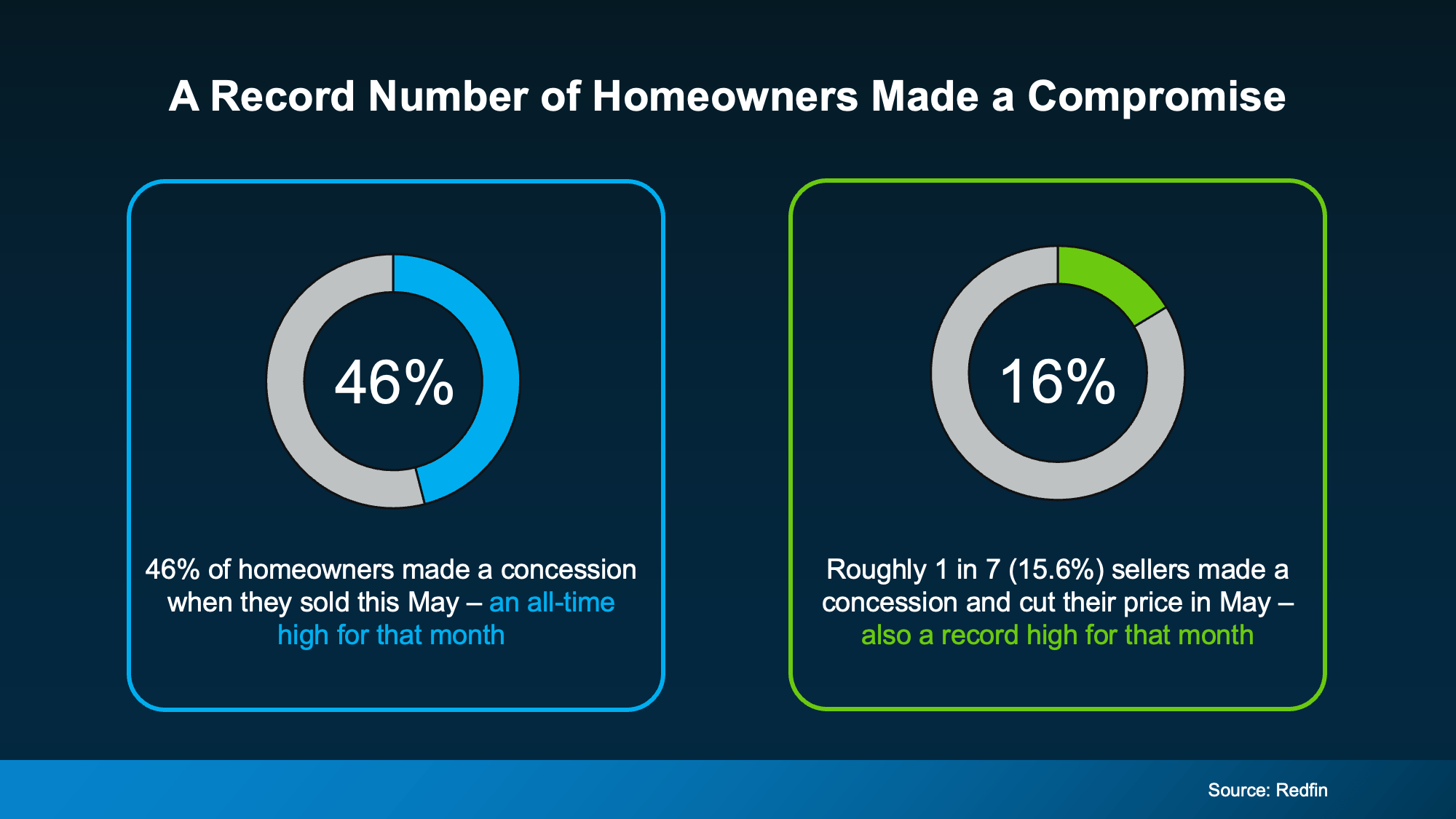
Almost half (46%) of homeowners who sold recently gave the buyer a concession, according to Redfin. That’s the highest share on record for this time of year. And roughly 1 in 7 (16%) sellers went a step further, cutting their asking price and offering a concession on top (see chart below):

a diagram of a homeowner's market 

So, what kind of concessions are we talking about?

A seller might cover part of your closing costs, take care of a repair, or offer a credit that trims your upfront costs. It’s how they keep a deal on track when buyers have more options to choose from – and homeowners aren’t the only ones compromising.

Builders Are Cutting Prices, Too

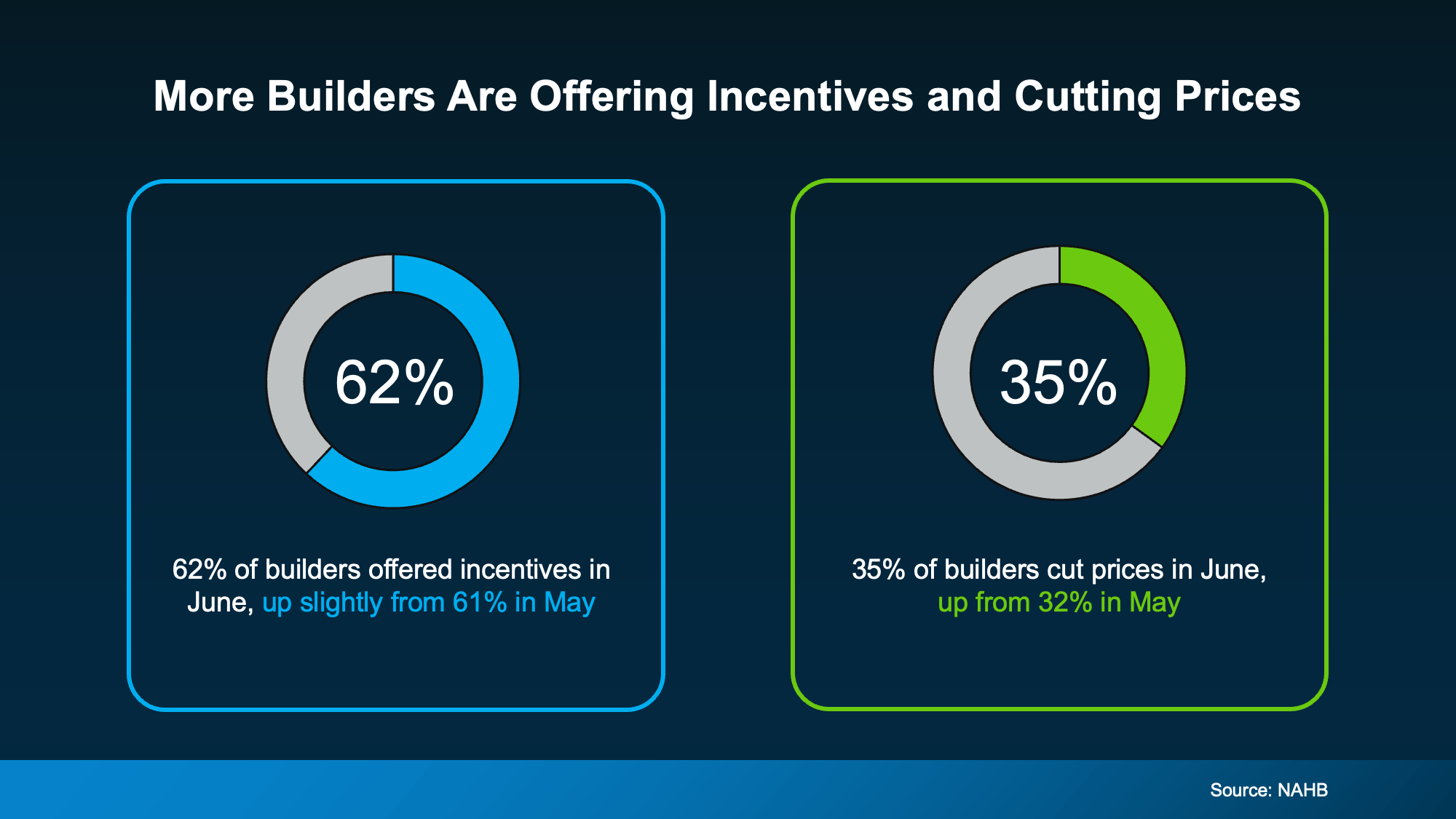
Newly built homes are seeing the same push and pull. According to the National Association of Home Builders (NAHB), 62% of builders are offering incentives right now. And about 35% are cutting prices outright (see chart below):

a screenshot of a graph

Those incentives often look like:

  • Price adjustments

  • Mortgage rate buydowns

  • Free upgrades, like nicer finishes or appliances

Danielle Hale, Chief Economist at Realtor.com, explains why:

"New construction has been one of the steadiest parts of the housing market over the past few years, but builders are clearly responding to today's affordability pressures and higher levels of existing-home inventory."

Even builders, who many people think rarely negotiate, are competing on price and perks. They have been for over a year now. The same data shows this is the 15th straight month where more than 60% of builders have offered incentives to sweeten the deal. And that’s significant.

What This Means for Your Move

If you're buying, this is a good time to ask. Whether you have your eye on an existing house or a newly built home, there's a chance the seller or builder will meet you partway on price, terms, or both.

If you're selling, expect buyers to ask. Even builders of brand-new homes are making concessions more often than not right now. Holding firm on every term could mean more time on the market, or a lost sale altogether.

Bottom Line

Sellers and builders are both giving buyers more to work with this year. Want to know what’s realistic to expect in concessions and incentives in our market? Let’s connect.

The House That Started It All Could Kickstart What's Next


The House That Started It All Could Kickstart What's Next


Remember how exciting it was to buy your first place? It felt like crossing a long-awaited finish line. It gave you a place to build your life. Maybe it’s where you lived when you got married. Or where you welcomed a child or a pet into the family.

But that was just the beginning.

For most people, your first house was never meant to be your forever home. It’s a stepping stone for what comes next.

And if your life looks different today than it did when you got the keys, you’re not stuck. Moving may be more realistic than you think.

Starter Home Inventory Is Still Relatively Low

If you've been wondering whether now is the right time to move up, here's something worth knowing. Starter homes remain one of the hardest types of homes to find. And that's good news if you're thinking about selling your first place.

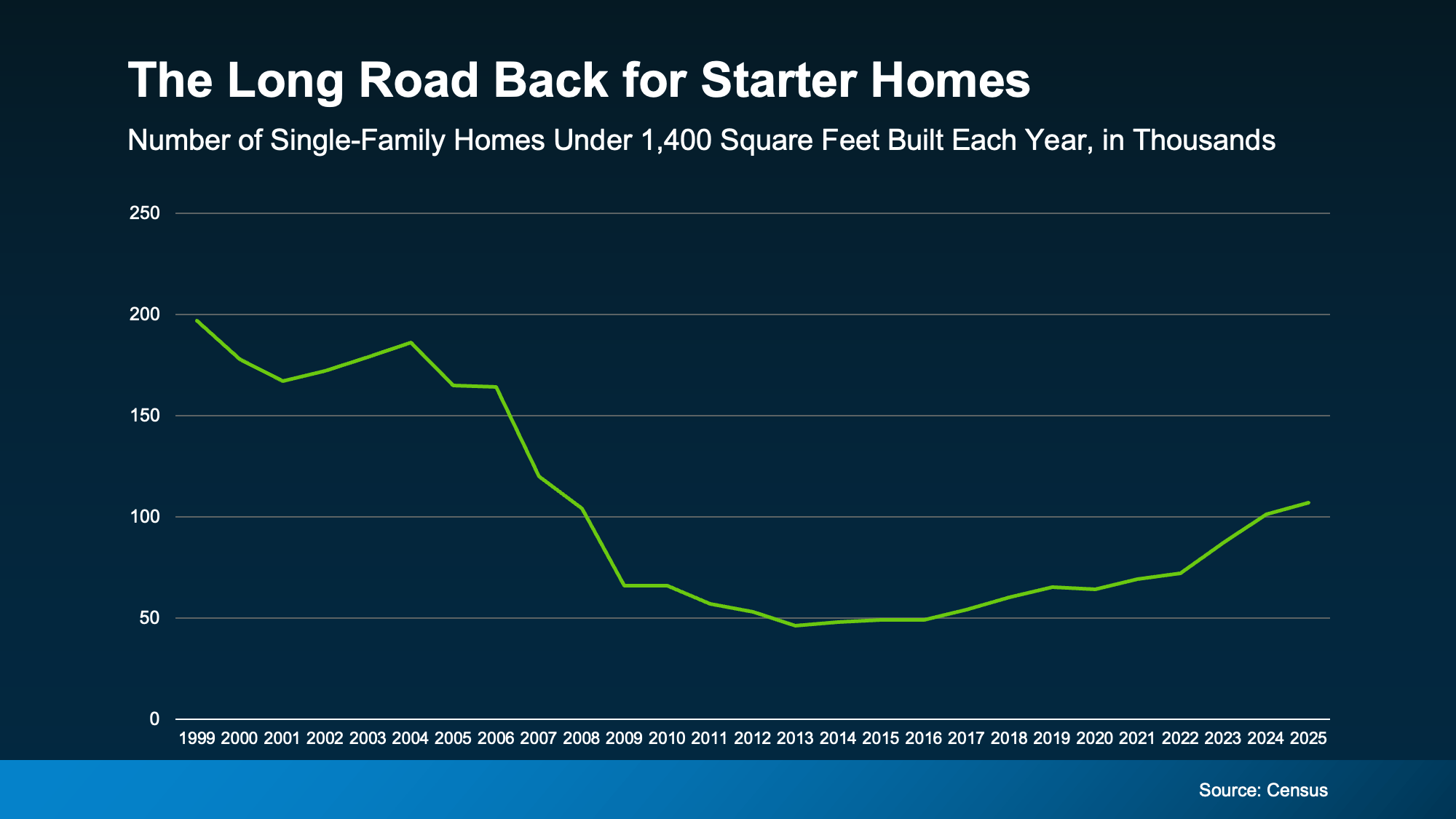
Historically, we haven’t been building enough homes for first-time buyers. And even though homebuilders have shifted more attention toward smaller, entry-level homes lately, the Census shows there’s a long way to go to re-build supply (see graph below):

a graph showing a growing trend

That means your current house is in demand – and that’s a dream scenario for sellers. But that’s only half the story. You also need somewhere to go.

There Are More Move-Up Homes on the Market

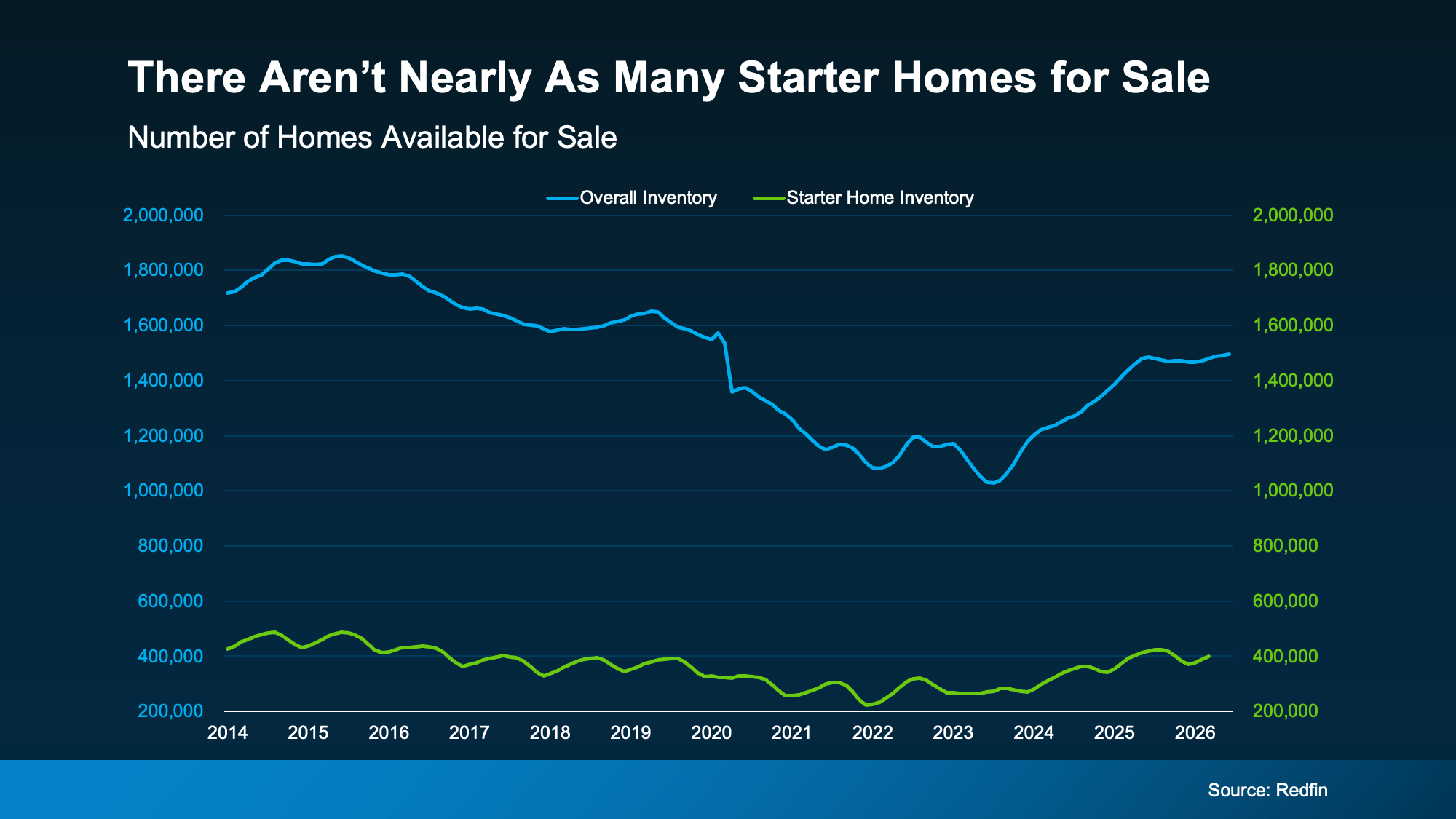
Here’s where this gets interesting. While the supply of starter homes remains tight (the green line), data from Redfin shows that the number of homes for sale has been climbing overall (the blue line):

a graph of sales and prices

As Nadia Evangelou, Principal Economist and Director of Real Estate Research at the National Association of Realtors (NAR), explains:

“Too much of the inventory available today remains concentrated at higher price points, leaving a shortage of options for entry-level and middle-income buyers.”

That means you may have more choices for your move up than you'd expect. Whether you're hoping for another bedroom, a home office, a bigger backyard, or simply more room for this next stage of life, today's market may finally be giving you the chance to find it.

At the same time, your current house may be exactly what someone else has been looking for because homes like yours are still in short supply. That's a unique advantage for move-up buyers. And it could help you sell for a stronger price. As Zillow says:

"Starter home value appreciation has outpaced other types of homes nationally, mostly because they're so in demand."

Your Biggest Advantage May Be Your Equity

Here’s the cherry on top. There's one more thing your first home has been doing behind the scenes, and that’s building equity. Every mortgage payment you've made and every year your home's value has grown has quietly increased your ownership stake in your house.

According to Cotality, the average homeowner with a mortgage has $295k in equity built up. While your number may be different, once you sell, it could become the down payment on your next home or help reduce the amount you need to borrow at today’s rates.

Put it all together and your move up becomes a lot more realistic than you think:

  • The house you're selling is in demand.

  • The house you're buying may be easier to find.

  • And the equity you've built can help bridge the gap between the two.

Your first home did exactly what it was supposed to do. It gave you a place to start.

Now, it may be the thing that helps you take the next step.

Bottom Line

Your first home was never meant to be your forever home. It was meant to help you build a life and build the financial foundation for whatever came next.

If your current home no longer fits the life you're living today, let’s connect. You may be closer to your next chapter than you realize.

More Homes, Better Prices: A Buyer’s Summer


More Homes, Better Prices: A Buyer’s Summer


If you’ve thought about buying a home in the past few years, you may have run into two frustrations: asking prices that kept climbing and too few homes to choose from.

In many places, both sticking points are letting up this summer, with lower asking prices and more homes for sale. Let’s look at the trends, and what they mean for your search.

Sellers Are Pricing To Attract Buyers

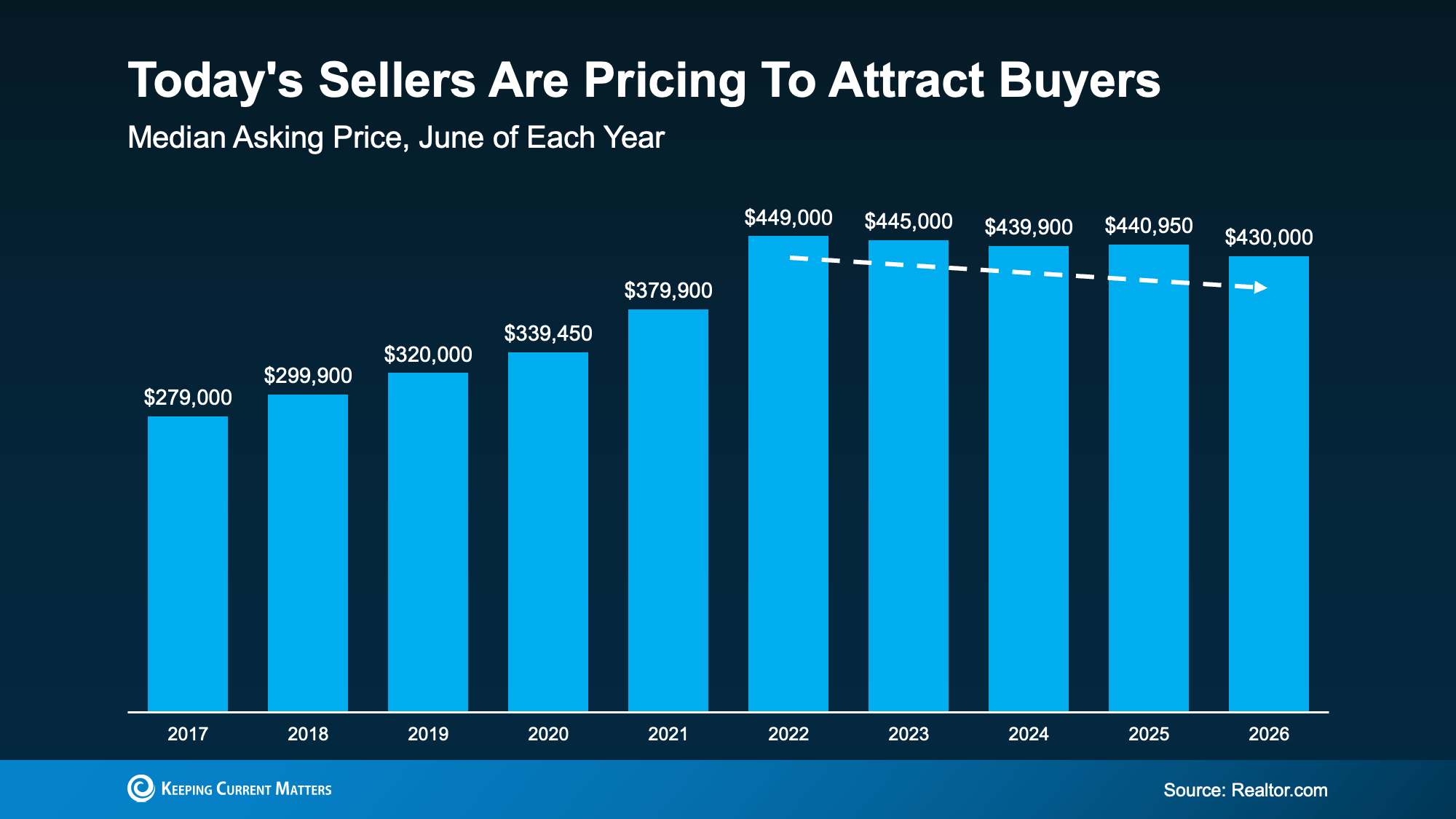
According to Realtor.com, the national median asking price was $430,000 in June, nearly $11,000 under what it was the year before (see graph below):

a graph of sales

That’s the eighth month in a row that the typical asking price has dipped below where they were the previous year, according to the same Realtor.com report.

And while falling prices can sound worrying, this isn’t a sign of an impending crash. We’re talking about asking prices, not sold prices. This is a sign that today’s sellers are meeting the market where it is and pricing to draw buyers. And that’s actually something normal we’d expect from the market. As Danielle Hale, Chief Economist at Realtor.com, puts it:

“Sellers are reading market conditions and are pricing accordingly from the start rather than listing high and cutting later, and buyers are taking note and making bids. This is a welcome sign that we are in a functioning market.

Asking prices were never going to climb forever – now they're just settling closer to what buyers can actually pay. That signals a healthier market, and sellers re-adjusting their expectations. 

More Homes Are Available Now

If you’ve spent the past few years watching homes disappear before you could even schedule a tour, this is for you.

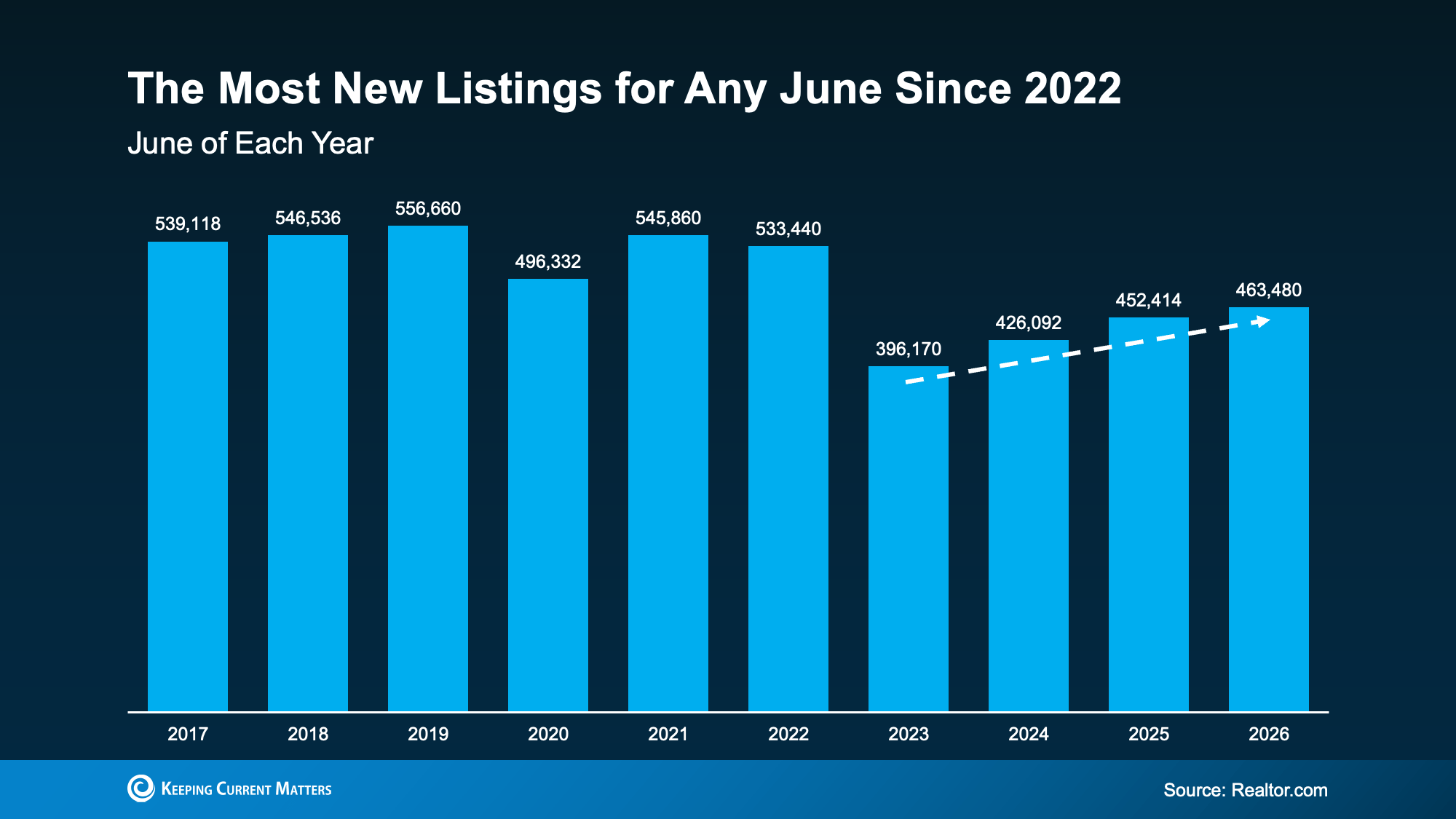
Supply is starting to catch up. According to Realtor.com, the number of homes listed for sale in June was the highest June number we’ve seen in three years (see graph below):

a graph with numbers and a number of blue bars

This means more options for you and less competition for each one.

Now, supply is not back to normal everywhere. As you can see, we’re still down from where we were back in 2017-2019. But in many places, it’s better than it’s been in a while. Here’s how that helps you.

You don’t have to rush an offer just to stay in the running, and you have better odds of finding and landing the right home, not just the one that’s available. Plus, you’ll have more room to negotiate, so you’re searching from a stronger position than buyers had even a year ago.

Why This Is Encouraging if You’re Buying Your First Home

For first-time buyers looking for lower-priced homes, these trends line up especially well. Mischa Fisher, Chief Economist at Zillow, explains:

“The lowest price tiers are exhibiting some softness in terms of price, they also had the most listing-activity growth, the first time since 2022 that’s been the case.”

So, if you’re searching for your first place or your next house, there's a little more to choose from and a little more give on price.

Bottom Line

If a tight budget or a thin selection has kept you from buying a home, now might be the time to restart your search.

Ready to see what’s available here? Let’s connect.

Thursday, July 23, 2026

NAR Pending Home Sales Report Shows 5.4% Decrease in June

NAR Pending Home Sales Report Shows 5.4% Decrease in June: Pending home sales fell 5.4% in June 2026 and were down 0.3% from a year ago, as elevated mortgage rates and record-high home prices continued to challenge buyers. Contract signings declined across all four U.S. regions month over month, though the Northeast and Midwest posted modest annual gains.

Friday, July 17, 2026

Student Loans Are Back in the News. Don't Let It Put Your Homeownership Plans on Hold.


Student Loans Are Back in the News. Don't Let It Put Your Homeownership Plans on Hold.


Student loans are back in the spotlight. And whether you've been following the headlines closely or just catching bits and pieces here and there, there's a good chance they've been on your mind lately.

And if you’re questioning whether you have to hit pause on your plans to buy a home, here's the thing you have to remember:

Having student loans doesn't automatically mean buying a home has to wait.

The Biggest Myth About Student Loans and Buying a Home

One of the most common misconceptions among first-time buyers is that they have to pay off their student loans before they can qualify for a mortgage. But in most cases, that's just not true. 

As an article from Redfin explains, student loans usually get evaluated the same way other debts do, like credit cards or car payments:

“Yes, you can get a mortgage with student loan debt. Lenders primarily assess your debt-to-income (DTI) ratio, which compares your monthly debt payments, including student loans, to your gross monthly income. Having student debt doesn’t automatically disqualify you if your DTI is within acceptable limits.”

So having that loan on your credit report isn't some special red flag that immediately disqualifies you.

Instead, lenders look at your overall financial situation, including your income, credit history, and more. Student loans are one piece of that puzzle, but they’re not the entire picture.

You're in Better Company Than You Think

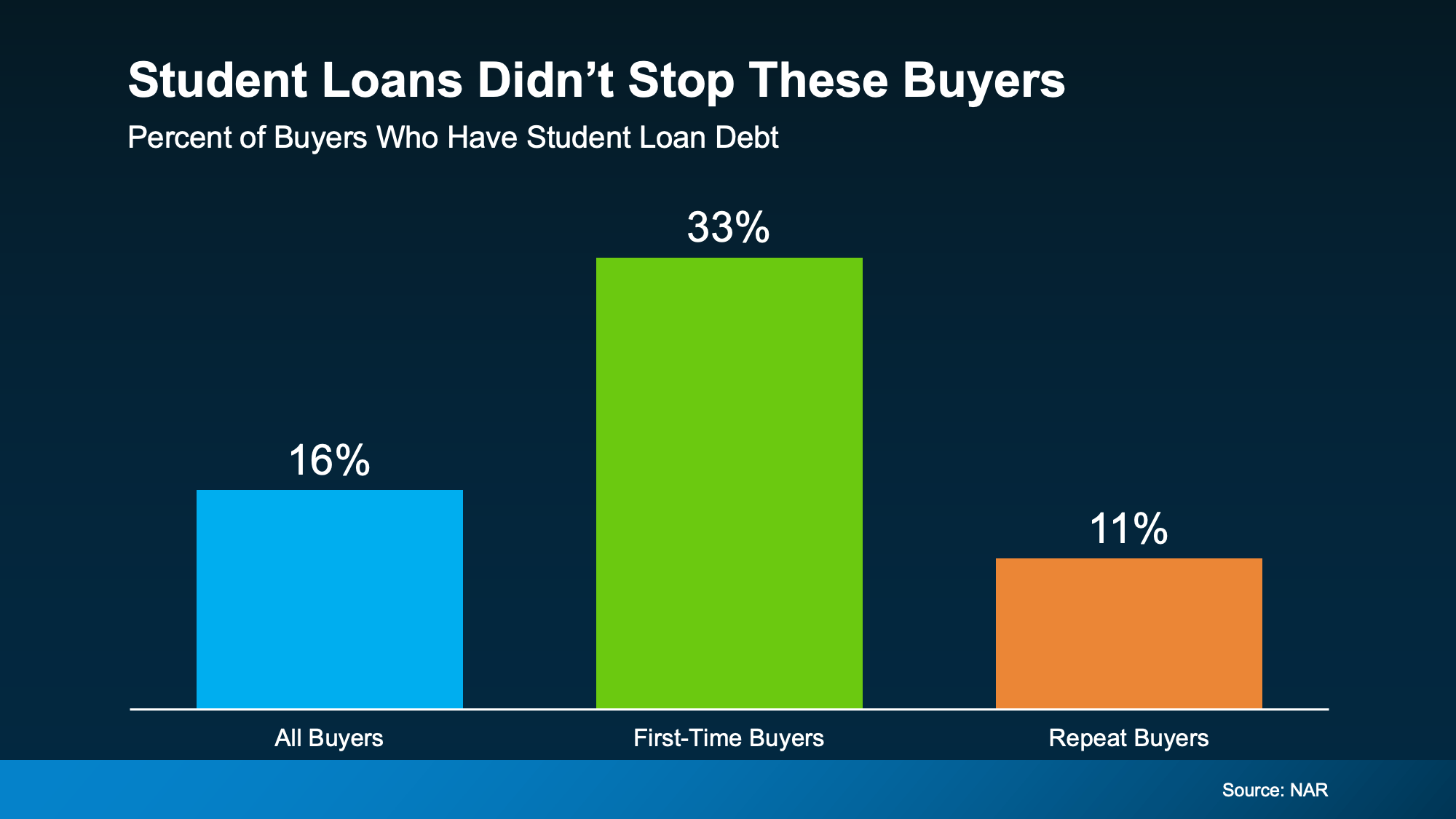
Just to really drive this home, here’s a stat from the National Association of Realtors (NAR) that proves you can have student debt and still buy a home. Their research shows 33% of first-time homebuyers still had student loan debt.

a graph of a student loan debt

That's 1 out of every 3 first-time buyers. The median amount they owed? $30,400.

Let that reassure you that people are buying homes with student debt every day. And carrying student loans doesn't automatically put homeownership out of reach.

Don’t Count Yourself Out Before You Even Try

At the end of the day, here's where a lot of buyers trip themselves up. They assume the worst and never even check what they could actually qualify for. But your situation is more unique than a blanket "no."

If your income is steady and the rest of your finances are in decent shape, buying a home could be more realistic than you think. The only way to know for sure is to actually run the numbers with someone who does this for a living.

You may discover you're closer to buying than you think.

Bottom Line

Student loans don't have to be the thing standing between you and owning a home. If you've been putting off your homebuying plans because of that debt, talk to a lender about your options. It may not be the barrier you think it is.

Think Nobody's Buying Homes Right Now? Think Again.


Think Nobody's Buying Homes Right Now? Think Again.


If you've been thinking about selling, you've probably seen plenty of headlines suggesting buyers have just about disappeared. But there's a big difference between a slow market and a stalled one.

Yes, mortgage rates are still higher than most people would like. Homes aren’t selling as fast as they were. And every week seems to bring another headline about buyers sitting on the sidelines. But here's what you haven't heard.

Despite everything going on, buyer demand has been remarkably resilient.

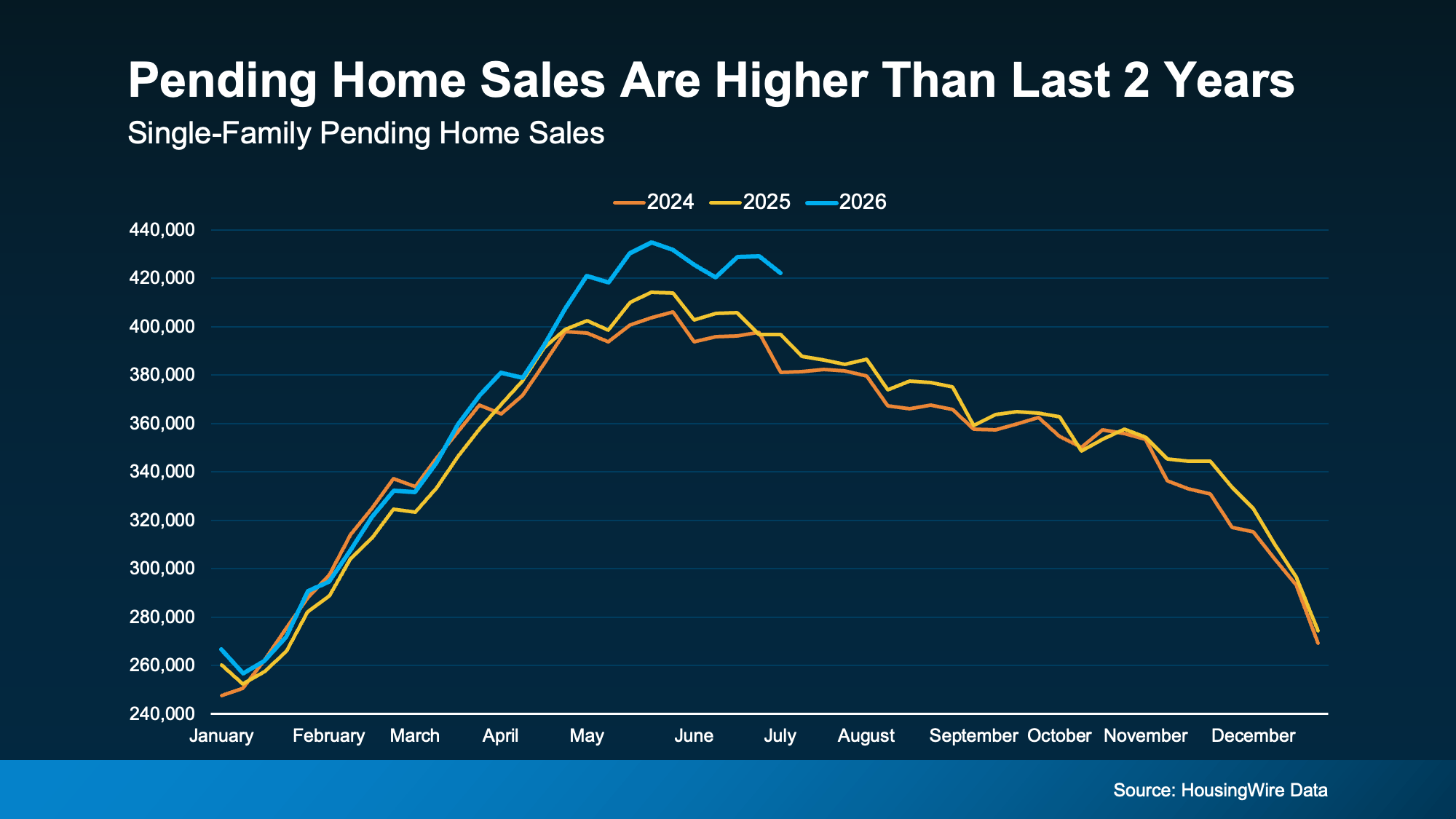
In fact, more sellers are getting to put up the “pending sale” sign now than during the last two years. What's even more surprising is that they're doing it at a time of year when activity usually starts to slow down.

And if you're thinking about selling, that's a trend worth paying attention to.

Buyers Are More Active Than You Think

One of the best ways to measure buyer demand is by looking at pending home sales. Those are homes that have gone under contract but haven't closed yet. Think of them as a real-time pulse check on the market and whether buyers are still buying.

HousingWire Data shows more homes are going under contract than at the same time the past 2 years (see graph below):

a graph showing the sales of a home sales

While it may come as a surprise, the numbers speak for themselves. It doesn’t mean buyers are everywhere, but it does mean they’re still active right now. And even if this ebbs and flows a bit in the weeks ahead, right now we’re still ahead of where we’ve been lately. That's encouraging news if you're thinking about selling because it tells us something important…

People haven't stopped buying homes. Serious buyers are still making moves.

And a lot of these people are buying because they decided they can't keep waiting. Whether it's a growing family, a new job, retirement, or simply wanting a different home, life keeps moving… even when mortgage rates stay higher than we'd like. As Lawrence Yun, Chief Economist at the National Association of Realtors (NAR), explains:

“A late spring buyer rush—even with mortgage rates not budging—is an indication of pent-up housing demand and consumers’ acceptance of above-6% mortgage rates as the new normal."

So, if you've been worried no one’s buying, this data should give you some confidence. Today’s buyers aren't just casually browsing open houses on a Sunday afternoon, they've spent months waiting for rates to improve and now they realize they can’t wait anymore.

That means they have a purposeand a timeline. And that's exactly the kind of motivated buyer you want to work with.

What This Means for Your Sale

Does that mean every house will sell instantly? No.

Today's market is more balanced than it was a few years ago.  So, you can’t just price your house however you want or skip preparing it for the market.

Now buyers have choices, and they're willing to wait for the right home at the right price. But sellers who understand today's market (and price and position their homes right) are still finding success. Because the idea that "no one's buying right now" just isn't supported by the data.

The buyers are there.

The opportunity is there.

The key is having the right strategy to capture it.

Bottom Line

This year's housing market may be moving slower than many of us hoped. But, buyer demand is more resilient than the headlines suggest.

If you're wondering whether there are enough buyers for your house, let's connect. I'll show you what's happening in our local market and build a strategy that helps you take advantage of the momentum that's already here.

The “Take It or Leave It” Attitude Is Fading from the Market – What That Means for You


The “Take It or Leave It” Attitude Is Fading from the Market – What That Means for You


Negotiations are back. More buyers are asking for better deals, and more sellers are giving them. Builders are throwing in extras, too. 

That’s why whether you’re buying or selling today, there are two terms you’ll hear a lot: concession and incentive.

  • A concession is something a seller agrees to during negotiations to get a deal done.

  • An incentive is a perk a builder (or a seller) advertises upfront to attract buyers.

Let’s run through what you need to know about both and how they could play a role in your move.

More Sellers Are Agreeing to Concessions

Almost half (46%) of homeowners who sold recently gave the buyer a concession, according to Redfin. That’s the highest share on record for this time of year. And roughly 1 in 7 (16%) sellers went a step further, cutting their asking price and offering a concession on top (see chart below):

a diagram of a homeowner's market 

So, what kind of concessions are we talking about?

A seller might cover part of your closing costs, take care of a repair, or offer a credit that trims your upfront costs. It’s how they keep a deal on track when buyers have more options to choose from – and homeowners aren’t the only ones compromising.

Builders Are Cutting Prices, Too

Newly built homes are seeing the same push and pull. According to the National Association of Home Builders (NAHB), 62% of builders are offering incentives right now. And about 35% are cutting prices outright (see chart below):

a screenshot of a graph

Those incentives often look like:

  • Price adjustments

  • Mortgage rate buydowns

  • Free upgrades, like nicer finishes or appliances

Danielle Hale, Chief Economist at Realtor.com, explains why:

"New construction has been one of the steadiest parts of the housing market over the past few years, but builders are clearly responding to today's affordability pressures and higher levels of existing-home inventory."

Even builders, who many people think rarely negotiate, are competing on price and perks. They have been for over a year now. The same data shows this is the 15th straight month where more than 60% of builders have offered incentives to sweeten the deal. And that’s significant.

What This Means for Your Move

If you're buying, this is a good time to ask. Whether you have your eye on an existing house or a newly built home, there's a chance the seller or builder will meet you partway on price, terms, or both.

If you're selling, expect buyers to ask. Even builders of brand-new homes are making concessions more often than not right now. Holding firm on every term could mean more time on the market, or a lost sale altogether.

Bottom Line

Sellers and builders are both giving buyers more to work with this year. Want to know what’s realistic to expect in concessions and incentives in our market? Let’s connect.

Monday, July 13, 2026

ONLY $440,000 - A must see SW Portland Vintage Chamer!

ONLY $440,000 - A must see SW Portland Vintage Chamer!  

NAR Existing-Home Sales Report Shows 2.4% Decrease in June

NAR Existing-Home Sales Report Shows 2.4% Decrease in June: Existing-home sales decreased by 2.4% month-over-month and increased 2.8% year-over-year, according to the National Association of REALTORS® Existing-Home Sales report. Month-over-month sales increased in the Northeast, and declined in the Midwest, South and West. Year-over-year sales rose in the Midwest, South and West and were flat in the Northeast.

Monday, July 6, 2026

NAR Statement On FHA Decision to Remove Red Tape and Promote Homeownership

NAR Statement On FHA Decision to Remove Red Tape and Promote Homeownership: NAR welcomes HUD and FHA policy changes to modernize the Single Family mortgage insurance program. The updates aim to lower costs, reduce regulatory burdens, and streamline lending for both borrowers and lenders. NAR supports expanding responsible access to credit and improving efficiency to strengthen housing affordability and create more paths to homeownership.

Monday, June 29, 2026

Experienced REALTORS® Anchor the Industry as Housing Affordability Remains Top Hurdle, New NAR Report Finds

Experienced REALTORS® Anchor the Industry as Housing Affordability Remains Top Hurdle, New NAR Report Finds: NAR’s 2026 Member Profile highlights a more experienced REALTOR® base, with 13 median years in the business. Most members plan to stay active, while income and expenses continue to rise. Housing affordability remains the top barrier for clients. The report also shows growth in team-based business and continued reliance on referrals and repeat clients.

Monday, June 22, 2026

NAR Pending Home Sales Report Shows 3.8% Increase in May

NAR Pending Home Sales Report Shows 3.8% Increase in May: Pending home sales in May increased by 3.8% month-over-month and 4.8% year-over-year, MoM and YoY pending home sales rose in the Northeast, Midwest, South and West.

Tuesday, June 16, 2026

Lower Asking Prices Are a Win for Today’s Buyers


Lower Asking Prices Are a Win for Today’s Buyers


If affordability has been the biggest thing standing between you and a home, there's a little good news. 

Asking prices have started to come down.

The typical seller listed their house for a median of $429,500 in May. That’s 2.4% lower than a year ago, according to Realtor.com. On its own, that won't transform what you can afford, but in today’s market every little bit helps and it signals a broader shift taking place.

Buyers Are Finally Catching a Break

Check out this data from Realtor.com and you can see this is the first May in years where buyers have caught any sort of break price-wise.

Each May from 2022-2025, things held pretty steady. But this year? You can see that more noticeable shift in your favor (see graph below):

a graph of sales in different colors

While the dip from $440,000 to $429,500 isn’t a big one, it gives you more breathing room. And that’s not a small thing when affordability has been this tough.

Now, lower asking prices don’t mean every home is suddenly within your range. But they do show buyers are gaining a little ground.

And in today’s market, a little ground can go a long way. 

What That Means for the Housing Market

And just in case this crossed your mind, this is good news for your move, not bad news for the market as a whole.

The subtle dip from last May to this one shows prices are easing, but they’re not dropping off a cliff. What this is actually a sign of is that the market’s rebalancing now that the number of homes for sale has grown.

Buyers have a bit more power again, and sellers know they can't name just any price and expect their house to sell. They either meet the market where it is, or face a price cut later. And in general, sellers would rather avoid a price cut. As the New York Post explains:

"Rather than swinging for the fences with pandemic-era price tags, sellers are increasingly coming to terms with a new reality. The share of listings featuring price cuts actually fell to 17.5% in May, suggesting homeowners are doing their homework before putting up a “For Sale” sign instead of chasing unrealistic numbers and cutting later."

This signals a broader change in the market.

Seller expectations have been skewed a little high since the pandemic buying frenzy – you've probably felt that firsthand. But now, things are starting to normalize. It could mean less back-and-forth to land on a fair number. And homes should be priced a bit more realistically from the start.

Bottom Line

If affordability has been your top concern, the recent dip in prices is an opening. Want to see what that looks like in our area? Let’s connect.

Monday, June 15, 2026

NAR Existing-Home Sales Report Shows 3.2% Increase in May

NAR Existing-Home Sales Report Shows 3.2% Increase in May: First-time buyers rose to 35% of all buyers — the highest share since June 2020 — driven by modest inventory improvements. Market outlook cooled for both buyers and sellers, with 25% of homes still selling above list price. Inspection contingency waivers dropped to 17%, down from 25% a year ago. Contracts closed in 30 days on average. Buyers continued to favor areas outside city centers at 82%.

Monday, May 18, 2026

NAR Existing-Home Sales Report Shows 0.2% Increase in April

NAR Existing-Home Sales Report Shows 0.2% Increase in April: Month-over-month sales increased in the Midwest and the South, were unchanged in the Northeast, and declined in the West. On a year-over-year basis, sales rose in the South, were flat in the West, and fell in both the Northeast and Midwest.

Monday, May 11, 2026

Could Co-Buying Be the Answer for Some First-Time Buyers?


Could Co-Buying Be the Answer for Some First-Time Buyers?


For a lot of would-be first-time buyers, affordability is the thing that’s standing in the way. But some buyers are getting creative and finding a way to still make the numbers work – and that’s through co-buying.

The Dream Is Still Alive. The Math Just Isn’t Working for Everyone.

Young people haven’t given up on the dream of owning a home – not even close. According to FirstHome IQ, homeownership still ranks among the top life goals for the next generation.

The problem? 73% of Gen Z and millennial buyers cite affordability as the reason for not making homeownership a priority. And it shows. First-time buyers now make up just 21% of all home purchases, the lowest share since the National Association of Realtors (NAR) started tracking the data in 1981.

But still, some buyers are making it happen. And a portion of them are turning to co-buying to get their foot in the door.

So, What’s Co-Buying?

Co-buying means purchasing a home with someone else, like a friend, sibling, or unmarried partner. You combine incomes, split the down payment, and share monthly costs. For some people, it’s a creative way to turn “someday” into a concrete move-in date that’s just around the corner.

And it's catching on fast, just look at where things stand today. According to CoBuy.io, 64 million Americans now co-own a home with someone they’re not married to. In fact, 31.5% of home purchases involve co-buyers (see graph below):

Why It Works

Here are just a few of the top reasons buyers are going this route, according to NerdWallet:

  • Quicker path to homeownership: If owning a home is a serious goal for you, buying with someone else can help make that reality on a shorter timeline. Two or more people can save up a down payment a lot faster than one. That’s less time waiting and more time building equity in a place that’s yours.

  • More purchasing power: With multiple incomes going toward the home purchase, you might be able to afford a nicer home or live in a more popular neighborhood. Sometimes teaming up means getting the home you actually want, not just the one you can barely afford on your own.

  • Easier loan qualification: Added income from more than one buyer can also help with your debt-to-income (DTI) ratio, which the lender will calculate based on all the borrowers.

  • Lower housing costs: Splitting up a mortgage payment multiple ways could maybe even make owning less expensive than renting. Plus, sharing costs can make repairs or renovations more manageable, too.

Things To Keep in Mind

If you’re considering going this route, there are some things you’ll want to think over. For starters, co-buying works best with people you trust and share financial goals with. So, before moving forward, make sure everyone agrees on how costs are split, who handles what, and what happens if one person wants to sell down the road.

That’s why a written co-ownership agreement can be a smart move. It keeps everyone on the same page and helps avoid headaches down the line. Think of it less like a legal formality and more like a game plan for your new investment.

Bottom Line

Affordability challenges are real, but they don't have to mean waiting indefinitely. Co-buying is helping some first-time buyers stop waiting and start putting down roots.

If you're curious whether it could work for your situation, let's talk. Reach out today and let's figure out your path to homeownership together.

Wednesday, May 6, 2026

4 Ways To Give Your Offer an Edge This Spring


4 Ways To Give Your Offer an Edge This Spring


Looking to buy a home this season? Here's what you should know. 

Buyers have more leverage today than they’ve had in years. There are more homes to choose from and, in many areas, sellers are more open to negotiation. 

But that doesn’t mean competition is gone completely. These days, it varies a lot depending on where you’re hoping to move. 

If you’re buying in a popular neighborhood, or in a market where there aren’t many homes for sale, you may still find yourself competing with another buyer.

And that’s especially true in the Spring. Here's how to stay one step ahead of any competition this season.

Why Your Best Offer Still Matters This Spring

According to experts at Zillow and Realtor.com, Spring is one of the busiest times of year to buy a home.

That’s because many buyers want to move now so they can settle in before the next school year. And when more buyers enter the market, competition naturally picks up. 

So, depending on where you’re buying, you may still need to move quickly and make a strong offer, even though the market overall has moderated. And that’s especially true if you find a home you really love.

This is what you need to know to make your offer stand out.

1. Lead with a Strong, Realistic Offer

It’s tempting to start low and negotiate up. And in some markets, that strategy can work. But if a home is priced well and getting attention, lowballing could hurt your chances.

Instead, focus on making an offer that reflects your local market. As Bankrate explains:

“There is no magic formula for an optimal home offer. Any offer will be heavily dependent on asking price and local market conditions . . . Your real estate agent will know the local market well and can advise what a competitive — but fair — offer will look like in your area.

The goal is to make an offer that makes sense for you and stands out to the seller.  

2. Have a Plan for Competing Offers

If you’ve fallen in love with a home, it’s important to have a plan in case there’s competition from another buyer. One strategy your agent may discuss with you is an escalation clause, which Investopedia explains like this:  

An escalation clause is a way to automatically escalate your bid by a certain dollar amount, up to a certain ceiling, to compete with other bids.

The key is knowing your budget and sticking to it. You don’t want to lose out over a small difference – and this can help prevent that. But you also don’t want to overpay.

Keep in mind that if the appraisal comes in lower than your offer, you may have to make up the difference out of pocket. Your agent can help you weigh those risks and determine the best approach for your situation.

3. Keep Your Offer Clean

Price matters. But sellers also look closely at your offer’s terms. In some cases, a simpler, cleaner offer can stand out – even if it’s not the highest. As Redfin says:

Sellers tend to want clean, straightforward offers with minimal strings attached. Keep your requests simple and focus on the essentials.

Your agent can help you prioritize what matters most, so you’re not giving up things you need, while still making your offer as appealing as possible.

4. Be Flexible Where You Can

Sometimes, what helps your offer the most is understanding what matters to the seller. NerdWallet explains:

As you prepare an offer, you tend to focus on what the seller has (a house) and what you want (their house). But you’ll gain a competitive edge by viewing the transaction from the seller’s eyes: What does the seller want?”

Does the seller need extra time to move out? Or do they want to move as soon as possible? Your agent can talk with the seller’s agent to find out what matters most. Flexibility here can make a big difference in how your offer is received.

Bottom Line

Today's market may be balancing out, but strong offers still matter – especially during the busy Spring season.

Curious how competitive things are (and what it’ll take to win) in our market? Let’s talk.

Thursday, April 30, 2026

Is Late May the Best Time To List Your House?


Is Late May the Best Time To List Your House?


You may have heard April 12-18 was the “best week” to list your house. That’s based on a report from Realtor.com. But now that it’s passed, you may be wondering if you missed your moment.

Here's the good news – you didn’t. 

Because the reality is, there isn’t just one perfect week to sell your house this Spring. There’s a window. And right now, you’re still in it.

Your Window To Sell Is Still Wide Open

Here’s why. Different organizations run studies like this every year. And they don’t always land on the exact same week. That’s okay. It’s because they're using different research methods and even different definitions of what “best” means.

But the fact that the results vary points to a larger trend. While there may be sweet spots, the entire Spring season gives sellers an opportunity to get some of the best conditions (and best sales prices) of the year.

And it’s definitely not too late to jump in.

Why Listing in Late May Is the Perfect Play

According to Zillow, the best time to list your house this year is the last 2 weeks of May. And that’s approaching fast.

Based on their analysis, this is the ideal time to do it if you want to make top dollar. Because, in this 2-week window, homes sell for more. Sometimes, quite a bit more.

Depending on where you are and the price point in your area, some homeowners may even net tens of thousands of dollars extra in this sweet spot. As Zillow explains:

“Why late spring? Buyer demand typically peaks before Memorial Day. Families want to move during the summer and settle in before the new school year. More buyers shopping at once can spark competition and lift prices.”

And they’re not the only ones saying listing in May could be the key to selling for more. ATTOM Data analyzed almost 52 million home sales over the past 10 years and found sellers in May are achieving some of the highest returns.

That means the ideal window this year is very much still open.

What This Means for You 

If your goal is to sell for the strongest possible price, this is where timing and strategy come together. And you want to be sure you’re ready to make the most of it.

So, what should you be doing right now?

When prepping for a fast-moving window like this, you don’t want to waste time or money on the wrong prep work. And your agent is your go-to to make sure you’re focusing on the right things.

They’ll be able to tell you if the “best week” is slightly different in your market. And what quick repairs or updates can help you get a higher price, without taking a ton of time or effort.

Here's a quick example of things an agent may recommend based on information from Redfin:

At the end of the day, when your prep time’s short, doing the right things matters more than doing more things.

Bottom Line

Zillow says the best time to list your house is just around the corner. Are you ready to make the most of it?

If you want to take advantage of this Spring sweet spot and get top dollar for your house, let’s talk about what you need to do now to get ready to hit the market.

The “Take It or Leave It” Attitude Is Fading from the Market – What That Means for You

  The “Take It or Leave It” Attitude Is Fading from the Market – What That Means for You Negotiations are back. More buyers are asking for b...